
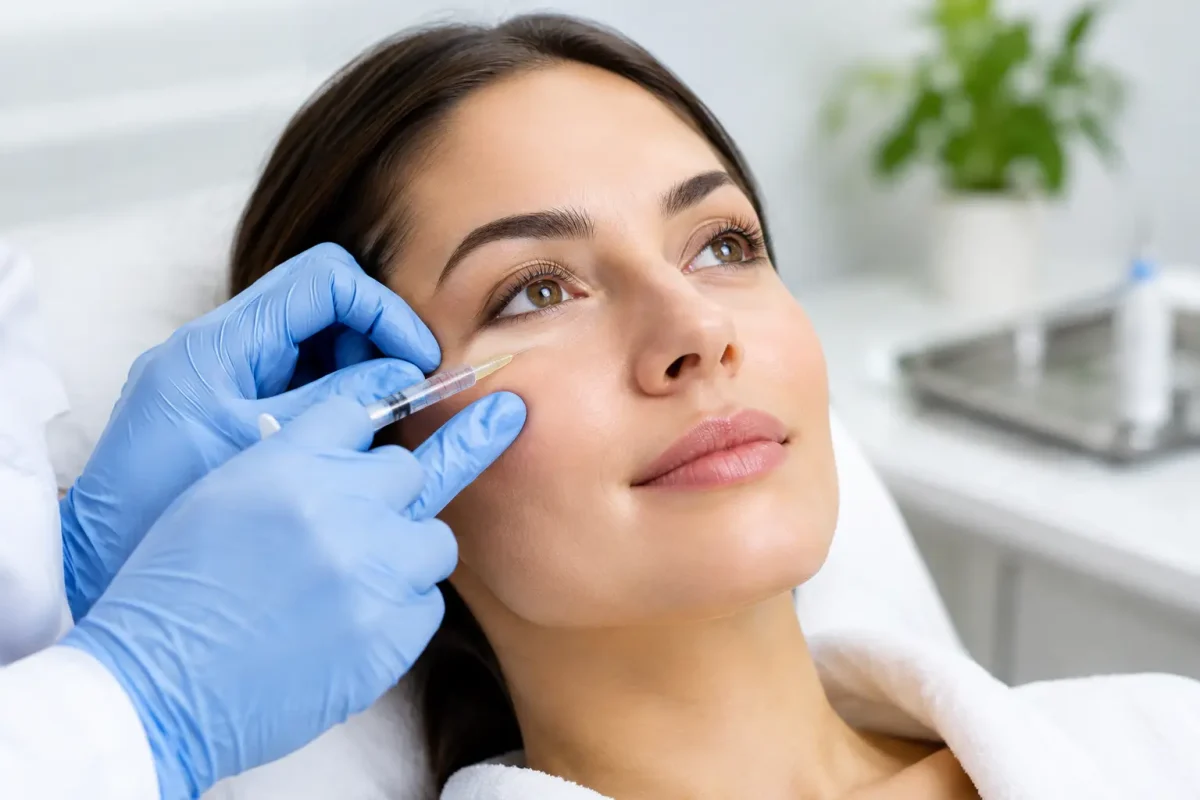
The under-eye area can make a person look tired even when they feel well-rested. Fine creasing, shadowing, and early hollowing often develop gradually, changing the way light reflects across the lower eyelid and upper cheek. PRF under eye treatment offers a biologically based option for patients who want subtle improvement using components derived from their own blood rather than added volume alone.
For the right patient, the goal is not to erase every line or create an overfilled appearance. It is to support healthier-looking skin, soften the transition between the lower eyelid and cheek, and preserve the natural character of the face.
What Is PRF Under Eye Treatment?
PRF, or platelet-rich fibrin, is prepared from a small sample of your blood. After collection, the blood is placed in a centrifuge to concentrate platelets, fibrin, white blood cells, and naturally occurring growth factors. These components can support tissue quality and collagen activity over time.
For the under-eye area, liquid PRF may be carefully injected into areas of crepey skin, mild hollowing, or discoloration related to thin skin and visible underlying structures. PRF can also be prepared as PRF gel in certain settings, offering a more supportive consistency for carefully selected areas. The appropriate formulation and placement depend on the patient’s anatomy, skin quality, and degree of volume loss.
Unlike a traditional hyaluronic acid filler, PRF does not create an immediate, highly visible filling effect. Its appeal is more gradual. Patients often choose it because it uses their own blood-derived material and is intended to improve the quality of the delicate under-eye tissue in a natural-looking way.
Why the Under-Eye Area Requires Precision
The lower eyelid is one of the most anatomically complex areas of the face. Skin is thin, blood vessels are close to the surface, and even small changes in volume can affect how the eyes appear. Dark circles are not one single concern, either. They can be caused by pigmentation, visible blood vessels, skin laxity, hollowing along the tear trough, lower eyelid fat prominence, or a combination of these factors.
This is why a thoughtful examination matters before recommending any injectable treatment. A patient with mild skin thinning and early shadowing may be a strong candidate for PRF. Someone with significant under-eye bags, lower eyelid laxity, or pronounced fat herniation may achieve a more meaningful and enduring improvement with lower eyelid surgery, sometimes combined with fat repositioning or facial fat grafting.
Skeletal structure also plays a role. The relationship between the cheekbone, orbit, lower eyelid, and midface determines whether a shadow is best addressed with regenerative treatment, structural support, surgery, or a combination of approaches. The most refined results come from treating the cause of the concern rather than simply filling what appears to be a hollow.
Who May Be a Good Candidate for PRF?
PRF under eye treatment is often well suited to patients who notice early creasing, mild hollowness, thin or fatigued-looking skin, or subtle dark circles that are not primarily caused by excess lower eyelid fat. It may also appeal to patients who prefer a gradual change and are not ready for surgery or traditional filler.
Patients should have realistic expectations. PRF can improve skin quality and soften certain shadows, but it cannot remove significant bags, correct substantial skin laxity, or fully resolve genetically driven pigmentation. Results also vary because the concentration and activity of a patient’s platelets are influenced by individual biology.
A consultation should include a review of medical history, medications and supplements, prior filler or surgical treatment, and any tendency toward bruising. Patients with certain blood disorders, active infections, or medical conditions that affect healing may not be candidates. A qualified provider can explain whether pausing specific medications or supplements is appropriate before treatment. Never discontinue prescribed medication without guidance from the clinician who manages it.
What Happens During Treatment?
The appointment begins with a blood draw, similar to routine laboratory testing. The sample is processed while the under-eye area is cleansed and prepared. Depending on the treatment plan, a topical numbing agent may be used to enhance comfort.
PRF is then placed with careful technique into the planned areas beneath the eyes. Some patients feel brief pressure or a mild pinching sensation, but treatment is generally well tolerated. The injection portion is typically brief, although the full visit allows time for preparation, assessment, and aftercare instructions.
Because the lower eyelid and upper cheek work as one visual unit, treatment may extend slightly beyond the tear trough itself. This does not mean every patient needs more product. It means placement should respect the way the entire under-eye region reflects light and transitions into the cheek.
Recovery and the Treatment Timeline
Most patients return to regular activities shortly after treatment. Mild swelling, tenderness, redness, or bruising can occur, particularly in the thin-skinned under-eye area. These effects usually settle over several days, though bruising may last longer for some individuals.
It is generally wise to schedule treatment with social events, photography, and travel in mind. Your provider may recommend avoiding strenuous exercise, alcohol, excessive heat, and unnecessary pressure on the treated area for a short period. Specific instructions should always take priority, since they are based on your treatment and medical history.
PRF works gradually. Some patients see an early improvement in hydration or texture, while collagen-related changes develop over weeks. A series of treatments is often recommended, commonly spaced several weeks apart, to build a more noticeable result. Maintenance plans are individualized rather than automatic, since some patients respond well to periodic treatment while others may benefit from a different strategy as facial aging progresses.
What Results Can PRF Realistically Provide?
The best PRF results are usually understated. The under-eye area may appear smoother, less crepey, and better supported, with a softer transition from the lower eyelid to the cheek. Many patients describe looking more rested rather than looking treated.
The trade-off is that PRF is not a one-visit substitute for every under-eye concern. Traditional filler may provide more immediate correction for selected cases of volume loss, but it also requires careful judgment in the lower eyelid region. Surgery can address excess skin, fat prominence, and eyelid laxity more directly, yet it involves greater downtime and a different level of commitment. Laser resurfacing or other skin-quality treatments may be considered when fine lines and surface texture are the primary issues.
For some patients, the most balanced plan combines treatments over time. For example, PRF may support skin quality while a structural procedure addresses lower eyelid bags or midface descent. Treatment should never be chosen because it is fashionable or minimally invasive alone. It should be chosen because it fits the anatomy and the patient’s priorities.
Choosing a Provider for Under-Eye Rejuvenation
Injecting beneath the eyes requires more than familiarity with a product. It requires a detailed understanding of eyelid anatomy, facial proportions, vascular safety, and the surgical options that may better serve a patient’s goals. A provider who understands both non-surgical and surgical rejuvenation can offer a more honest recommendation when PRF is appropriate, when another treatment would be preferable, and when no treatment is the most prudent choice.
At Advanced Facial Surgery, Dr. Manolis G. Manolakakis approaches under-eye rejuvenation with the same principle that guides facial surgery: skeletal expertise meets surgical artistry. Each recommendation is based on the individual face, with attention to safety, proportion, and results that remain believable in everyday life.
A well-planned PRF treatment should leave you looking like yourself, only less defined by under-eye fatigue. The most useful next step is a personalized consultation where your skin, lower eyelid structure, and long-term goals can be assessed without pressure.