
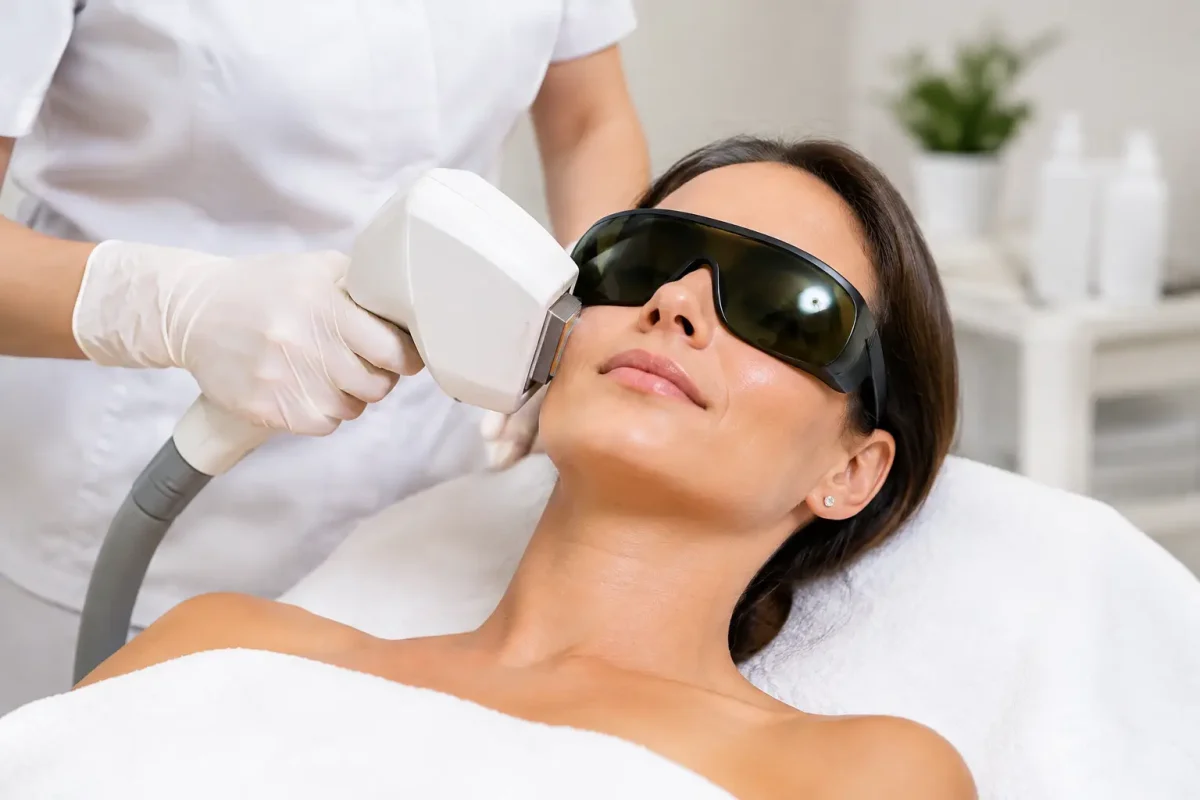
Years of driving, outdoor exercise, vacations, and even brief daily sun exposure can leave a visible record on the skin: brown spots, mottled tone, persistent redness, and a complexion that no longer reflects how rested you feel. IPL treatment for sun damage can improve many of these concerns without surgery or extensive downtime, provided the skin concern, skin tone, and treatment plan are evaluated carefully.
At Advanced Facial Surgery, non-surgical skin treatments are approached with the same principle that guides facial surgery: every recommendation should support natural-looking, lasting facial harmony. IPL is not a one-size-fits-all reset button. It is a precise light-based treatment that can be highly effective for the right patient and the right type of discoloration.
What IPL Treatment for Sun Damage Can Address
IPL stands for intense pulsed light. Unlike a laser, which delivers one focused wavelength of light, IPL uses a broad range of light wavelengths delivered in controlled pulses. Those wavelengths are absorbed by pigment and, in some cases, visible blood vessels near the skin’s surface.
For sun-damaged skin, the primary target is often excess melanin. When light energy reaches areas of concentrated pigment, such as sun spots or freckles, it gently heats and breaks up that pigment. The body then clears the treated pigment through its normal healing processes. Brown spots commonly darken first, then gradually flake away or fade over the following days.
IPL may be especially helpful for diffuse sun damage rather than a single isolated spot. It can improve the appearance of uneven pigmentation on the cheeks, forehead, nose, chest, neck, and hands. It may also reduce visible redness, small broken capillaries, and the flushed background tone that can accompany chronic sun exposure.
The goal is not to erase every freckle or change the character of your skin. Thoughtful IPL treatment aims to create a clearer, more even, more rested-looking complexion while preserving an authentic appearance.
The Difference Between Sun Damage and Other Pigment Concerns
Not all discoloration responds to IPL in the same way. This distinction matters because pigment can have different causes, sit at different depths in the skin, and react differently to heat and light.
Sun spots, often called solar lentigines, tend to be well-defined brown areas caused by cumulative ultraviolet exposure. These are among the pigment concerns that can respond very well to IPL. Freckles and generalized mottled pigmentation may also improve.
Melasma requires more caution. This hormonally influenced form of hyperpigmentation often appears as symmetrical patches across the cheeks, forehead, upper lip, or jawline. Heat and light can aggravate melasma in some patients, particularly when the condition is active or when sun protection is inconsistent. IPL may be appropriate in selected cases, but it is not automatically the preferred treatment.
A consultation should also distinguish cosmetic discoloration from any spot that needs medical assessment. A changing, irregular, bleeding, painful, or unusually dark lesion should be evaluated before it is treated cosmetically. Safe aesthetic care begins with knowing exactly what is being treated.
Who Is a Good Candidate for IPL?
The best candidates often have lighter to medium skin tones, visible sun spots or redness, and realistic expectations about gradual improvement. They are able to avoid tanning before and after treatment and are prepared to use broad-spectrum sunscreen consistently.
Because IPL seeks pigment, treatment requires particular care in deeper skin tones. When there is less contrast between the unwanted pigment and surrounding skin, there can be a higher risk of unwanted lightening, darkening, or uneven pigment changes. That does not mean every patient with a deeper complexion is excluded from light-based treatment. It means the device, settings, skin preparation, and alternatives must be selected with expertise.
IPL may need to be postponed if you have an active rash, infection, open wound, recent tan, or significant irritation in the treatment area. Certain medications and a history of abnormal pigmentation or light sensitivity can also affect candidacy. Your provider should review these details rather than relying on a standard protocol.
Patients seeking a dramatic change in texture, deep wrinkles, laxity, or substantial scarring may need a different approach. IPL can brighten and refine the surface of the skin, but it does not replace resurfacing treatments, microneedling, skin-tightening technologies, or surgical rejuvenation when those are the concerns that matter most.
What Happens During an IPL Session?
An IPL appointment generally begins with clean skin and protective eyewear. A cooling gel may be applied, depending on the device and treatment area. The handpiece is placed against the skin as the provider delivers a sequence of light pulses.
Most patients describe the sensation as a quick snap of warmth, similar to a small rubber band against the skin. The intensity varies by area and by the settings required for the condition being treated. Topical numbing is not always necessary, although comfort measures can be discussed during planning.
A full face treatment may take roughly 20 to 30 minutes, while additional areas such as the neck, chest, or hands can add time. The efficiency of IPL makes it appealing for patients who want meaningful skin renewal without stepping away from work or social life for an extended recovery.
Recovery: What Your Skin May Look Like Afterwards
Immediately after treatment, the skin may feel warm and look mildly pink, much like a light sunburn. This commonly settles within hours to a day or two. Redness can last longer in sensitive skin or when vascular concerns are treated more aggressively.
The most visible part of recovery is often the darkening of sun spots. Treated pigment may become darker brown or resemble fine coffee grounds before it sheds naturally over approximately one to two weeks. This is an expected part of the process. Picking, scrubbing, or using harsh exfoliants can interfere with healing and increase the chance of irritation.
During recovery, gentle cleansing, a bland moisturizer, and daily broad-spectrum sunscreen are essential. Avoid direct sun exposure, tanning beds, excessive heat, and aggressive skincare until your skin has settled. Your provider may recommend pausing retinoids, exfoliating acids, or other active products for a short period based on your treatment settings and skin sensitivity.
Makeup can often be worn the next day if the skin is intact and comfortable, though some patients prefer to let the skin breathe while redness resolves. There is usually little true downtime, but timing treatment before a major event deserves some planning because pigment darkening can be noticeable.
How Many IPL Treatments Are Needed?
Some patients see a visible change after one session, especially when treating distinct sun spots. More commonly, a series of three to five treatments, spaced several weeks apart, produces a more even and comprehensive result. The right number depends on the degree of sun damage, the presence of redness, skin type, response to treatment, and desired level of refinement.
Results are not permanent if new sun exposure continues to create new pigment. IPL clears existing visible damage but cannot make skin immune to ultraviolet radiation. Maintenance treatments may be useful for patients who spend significant time outdoors or want to preserve a consistently bright complexion over time.
This is where treatment planning becomes more valuable than chasing a single appointment. The strongest results usually come from combining in-office care with a disciplined at-home routine that includes sunscreen, protective clothing, and skincare selected for your skin’s needs.
IPL Compared With Other Skin-Rejuvenation Options
IPL is often chosen for color concerns: brown spots, freckles, redness, and uneven tone. If the primary concern is texture, enlarged pores, fine lines, acne scars, or roughness, laser resurfacing or a hybrid resurfacing treatment may offer greater improvement. If the concern is laxity around the jawline, cheeks, or neck, energy-based skin tightening or surgical facial rejuvenation may be more appropriate.
Many patients benefit from a staged plan rather than one treatment doing everything. For example, IPL can address visible discoloration first, while resurfacing or collagen-stimulating treatments improve texture and quality over time. Injectable treatments may address volume or expression lines, but they do not remove sun spots. Each option works at a different layer of facial aging.
The most refined outcome comes from matching the treatment to the anatomy and concern, not from using the most aggressive device available. A careful evaluation makes that distinction clear and helps avoid unnecessary treatment.
Protecting Your Results Starts the Next Morning
Sun protection is not an afterthought following IPL. It is part of the treatment itself. Use a broad-spectrum sunscreen with SPF 30 or higher every day, apply enough product to cover the face and neck, and reapply when outdoors. A hat, sunglasses, and shade provide meaningful added protection, particularly during long drives, outdoor sports, and vacations.
If sun damage has made you more aware of your skin, that awareness can become an opportunity for thoughtful care rather than a reason to pursue a dramatic change. With the right assessment, IPL can be a measured, effective way to restore clarity while keeping your features – and your confidence – recognizably your own.