
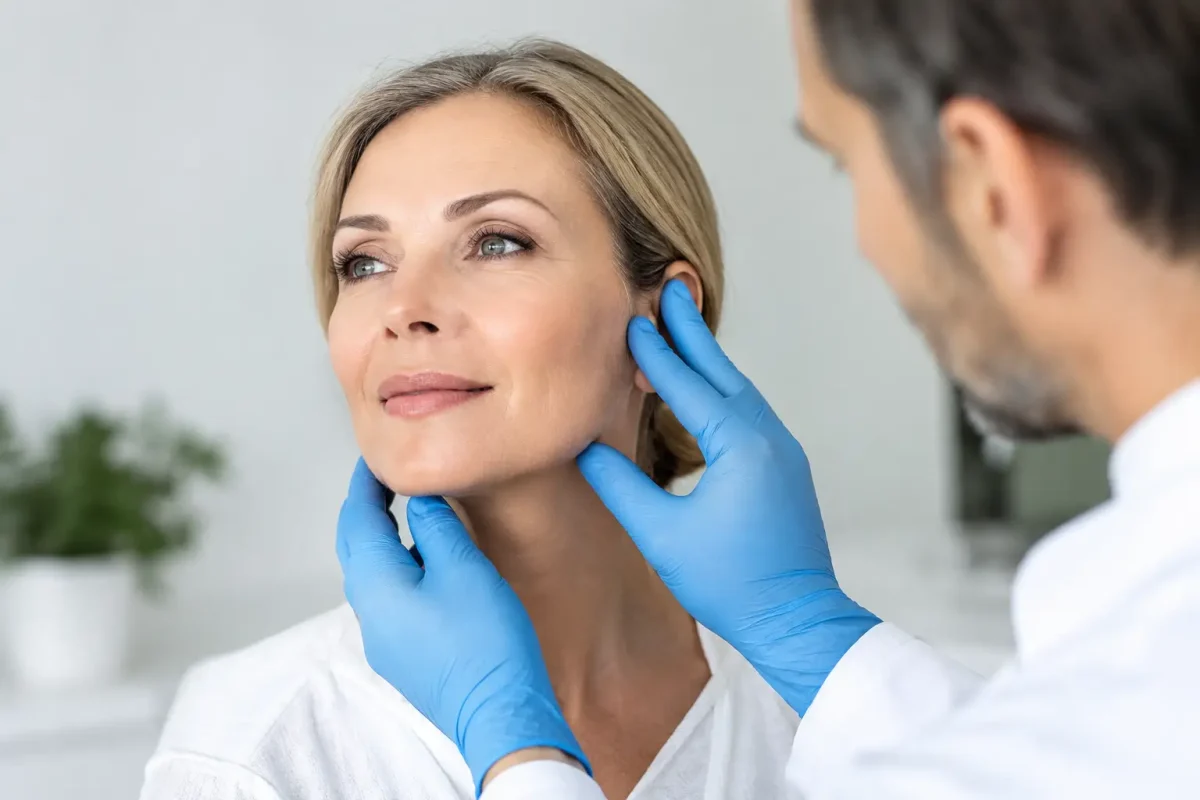
A face can look tired long before it looks old. The cheeks may descend, the jawline may soften, and folds beside the mouth can become more pronounced – even when the skin itself still has good quality. A deep plane facelift explained clearly begins with this distinction: it is not simply a tighter-skin procedure. It is a method of repositioning the deeper facial support tissues that have shifted with time.
For patients seeking facial rejuvenation in Monmouth County and Manhattan, the appeal is often straightforward. They want to look rested, refined, and like themselves – not pulled, overfilled, or visibly operated on. A deep plane facelift can be an excellent option for the right patient, but it requires precise planning, detailed knowledge of facial anatomy, and a candid conversation about what surgery can and cannot achieve.
What Is a Deep Plane Facelift?
A deep plane facelift is an advanced facial rejuvenation procedure that addresses the layers beneath the skin and superficial muscular layer of the face. In a traditional facelift, the surgeon may tighten skin and the SMAS, or superficial musculoaponeurotic system, to improve laxity. In a deep plane approach, the surgeon works beneath the SMAS in carefully selected areas, releasing deeper retaining ligaments and repositioning the cheek, midface, and jawline as a more unified layer.
That distinction matters because facial aging is not only a skin problem. With time, deeper soft tissues descend and volume distribution changes. The midface can flatten, the nasolabial folds may deepen, jowls can form along the jawline, and the transition between the cheek and lower face may lose its smooth contour.
By releasing and elevating deeper tissues rather than relying primarily on skin tension, a deep plane facelift is designed to restore more natural facial relationships. The goal is not to erase every line. It is to improve the architecture of the face so the result appears harmonious at rest and in motion.
Deep Plane Facelift Explained: What It Can Improve
A well-planned deep plane facelift commonly focuses on the midface, lower face, and upper neck. It may improve cheek descent, prominent folds around the mouth, jowling, loss of jawline definition, and loose tissue beneath the chin. Many patients notice that the face looks less heavy through the lower third and more supported through the cheeks.
The procedure is especially valued for its potential to improve the midface without creating an overly tight appearance around the mouth. Because the tissues are elevated from a deeper level, the surgeon can often reposition volume higher on the cheek while using less tension on the skin closure.
Still, no single facelift technique is right for every face. A patient whose primary concern is isolated neck banding may need a different emphasis than someone with substantial cheek descent. Significant volume loss may call for carefully placed facial fat grafting. Heavy upper eyelids, brow descent, or under-eye concerns may be better addressed with eyelid surgery or a brow lift at the same time. Facial rejuvenation is most convincing when each recommendation serves the individual anatomy rather than a trend.
How the Surgery Is Performed
Deep plane facelift surgery is typically performed under anesthesia in an accredited surgical setting. Incisions are usually placed discreetly around the ear and may extend into the hairline depending on the degree of correction needed. For patients requiring neck refinement, a small incision beneath the chin may also be used.
After making the planned incisions, the surgeon carefully elevates the facial tissues and enters the appropriate deep plane. This is where technical experience matters greatly. The face contains intricate networks of nerves, blood vessels, ligaments, fat compartments, and muscles. Safe, effective dissection depends on understanding how these structures relate to one another in three dimensions.
The retaining ligaments that tether descended tissue are selectively released. The deeper cheek and lower facial tissues can then be repositioned upward and outward in a direction that respects the patient’s natural facial shape. Excess skin is trimmed conservatively, with the closure designed to lie without undue tension.
A neck lift may be performed during the same operation when loose neck skin, platysma banding, or deeper neck fullness affects the overall result. Addressing the jawline without considering the neck can leave the lower face looking incomplete. Conversely, not everyone needs extensive neck work. The surgical plan should reflect what will create the most balanced improvement.
Who May Be a Good Candidate?
Deep plane facelift candidates are often in their 40s, 50s, 60s, or beyond, although age alone is not the deciding factor. The best candidates have visible descent in the cheek and lower face, reasonable skin quality, and a desire for durable structural improvement rather than repeated temporary treatments.
Good general health and realistic expectations are equally essential. A facelift can create meaningful rejuvenation, but it does not stop the aging process, change skin texture completely, or make a person look like someone else. Patients who are seeking refinement rather than transformation are often the most satisfied.
Smoking and nicotine use require particular attention because they can compromise blood flow and healing. Certain medications, bleeding conditions, uncontrolled medical issues, and prior facial procedures may also influence the surgical plan. A history of fillers, threads, prior facelift surgery, facial trauma, or significant weight fluctuation does not automatically rule out treatment, but it makes individualized evaluation even more valuable.
At Advanced Facial Surgery, planning is grounded in the principle that skeletal expertise meets surgical artistry. The underlying bone structure, facial proportions, skin quality, soft-tissue descent, and prior surgical history all affect which approach is appropriate and how the tissues should be repositioned.
Preparing for a Deep Plane Facelift
Preparation begins well before the procedure date. During consultation, patients should be ready to discuss their health history, medications and supplements, prior procedures, and the specific changes they see in photographs or the mirror. Clear communication helps establish a plan that respects both aesthetic goals and anatomical realities.
Your surgeon may ask you to stop certain medications or supplements that increase bleeding risk. Nicotine cessation is typically required before and after surgery. Patients should also arrange for a responsible adult to drive them home, stay with them initially, and help create a calm recovery environment with easy meals, pillows, ice packs, and prescribed medications available.
It is wise to plan social downtime generously. Although many people feel comfortable appearing in public within a few weeks, bruising and swelling resolve at different rates. Giving yourself time protects both privacy and peace of mind.
Recovery: What the First Weeks Are Really Like
The first several days are usually defined more by swelling, tightness, and fatigue than severe pain. Prescription medication may be used briefly, followed by over-the-counter options when appropriate. Dressings or a supportive facial garment may be used, and follow-up visits allow the surgical team to monitor healing closely.
Bruising often improves substantially over the first two weeks, while swelling continues to settle over several weeks and sometimes months. The jawline and neck may feel firm or numb at first. Temporary numbness around the ears and cheeks is common as tissues heal, and sensation generally improves gradually.
Light walking is encouraged early, but strenuous exercise, heavy lifting, bending, and activities that raise blood pressure should be avoided until cleared by the surgeon. Incision care, sun protection, and scar management instructions should be followed carefully. The early result can be encouraging, but patience is part of the process. A deep plane facelift continues to refine as residual swelling resolves and the tissues settle naturally.
Risks, Trade-Offs, and Realistic Expectations
Every facelift involves risks, including bleeding, infection, delayed healing, fluid collection, scarring, asymmetry, changes in sensation, hairline changes, and the possibility of revision. With deep plane surgery, the technical proximity to facial nerve branches makes advanced anatomical knowledge especially relevant. Thoughtful patient selection, meticulous technique, and close postoperative care are central to reducing risk, though no procedure is risk-free.
The trade-off for a more comprehensive structural lift is that it is surgery: it requires recovery time, visible early healing, and a meaningful financial investment. Non-surgical treatments can improve certain concerns, but they cannot reposition descended facial tissues in the same way. For someone with early laxity, injectables, skin treatments, or energy-based procedures may be appropriate. For someone with pronounced jowling and midface descent, those options may offer only limited or short-lived improvement.
The most successful result is often the one other people cannot immediately identify. Friends may say you look well-rested, healthier, or as though you have had a long vacation. That understated response is not an accident. It reflects a plan centered on facial harmony, appropriate vector of lift, and respect for the features that make your face recognizably yours.
A private consultation is the right place to ask whether a deep plane facelift fits your goals, anatomy, and lifestyle. The best recommendation should leave you feeling informed rather than pressured – and confident that your face is being evaluated with the care it deserves.