
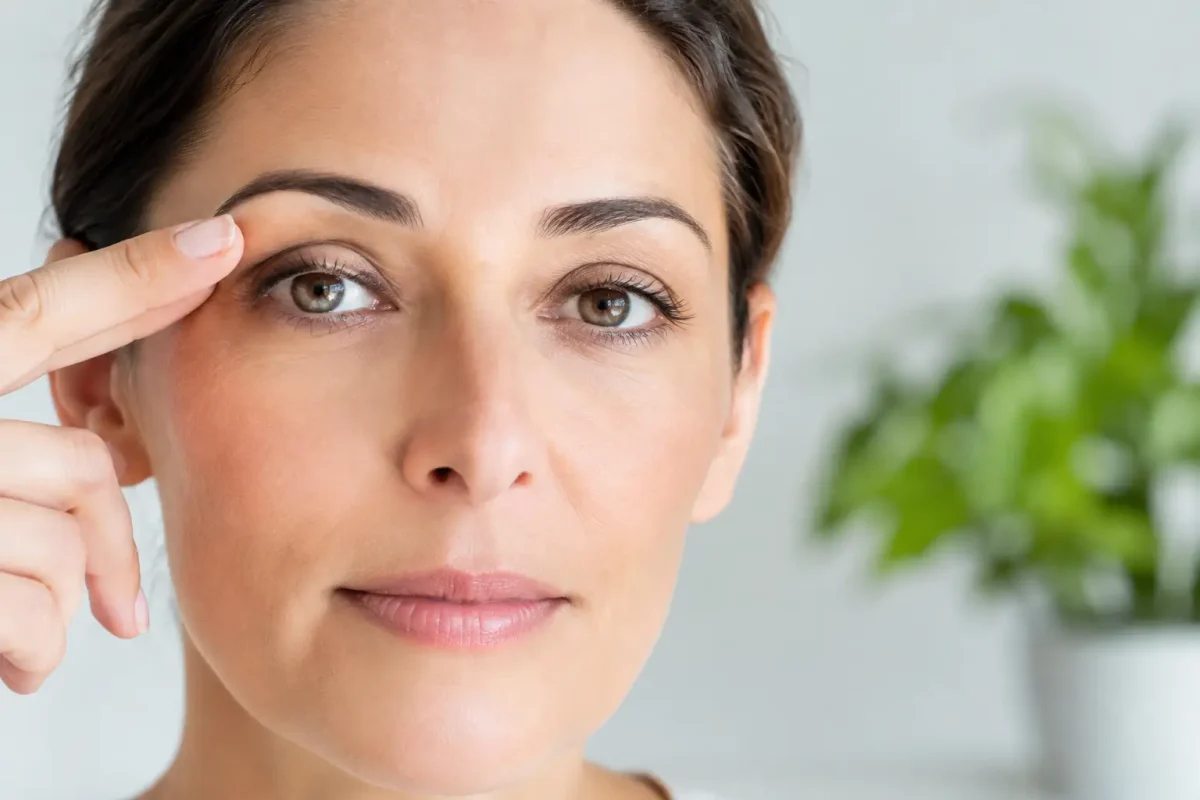
A tired or heavy-eyed appearance is not always a matter of skincare, sleep, or aging gracefully. In many cases, the best options for droopy eyelids depend on a precise answer to a more fundamental question: is the eyelid itself low, is excess skin creating a fold, or has the brow descended and crowded the upper eye area?
These concerns can look remarkably similar in a mirror, yet they require different treatments. Treating the wrong structure may leave a patient looking unchanged or, in some cases, overcorrected. Thoughtful eyelid rejuvenation begins with careful facial analysis, including the position of the brow, the strength of the eyelid muscle, the quality of the skin, eye health, and the relationship of the eyes to the surrounding facial framework.
Best Options for Droopy Eyelids Begin With the Cause
“Droopy eyelids” is a broad term. A surgeon may use different terms depending on what is causing the appearance.
Ptosis means the actual upper eyelid margin sits too low over the eye. It can be congenital, related to aging, caused by contact lens use, associated with prior surgery or trauma, or occasionally connected to a neurologic or muscular condition. Beyond appearance, significant ptosis can obstruct the upper field of vision.
Dermatochalasis refers to loose, redundant upper eyelid skin. This is a common age-related change that can create a hooded look even when the eyelid margin is in a normal position. Upper eyelid blepharoplasty is often the appropriate procedure for this concern.
Brow ptosis occurs when the eyebrow descends. As the brow moves downward, it pushes skin toward the upper eyelid and can make the eyes appear heavy, tired, or less open. Some patients who believe they need eyelid surgery actually benefit more from a brow lift, while others benefit from a conservative combination of procedures.
There are also situations in which asymmetry, a prominent brow bone, hollowing around the eyes, or facial volume loss changes how the lids are perceived. This is why a standardized approach rarely produces the most natural result. The eyes must be evaluated as part of the face, not as isolated features.
Upper Eyelid Blepharoplasty for Excess Skin
Upper blepharoplasty removes or repositions excess skin and, when appropriate, small amounts of protruding fat from the upper eyelid. The goal is not to create a dramatically different eye shape. It is to reduce heaviness while preserving the patient’s natural eyelid crease, expression, and ability to close the eyes comfortably.
For many patients, this procedure offers the most direct solution to hooded upper lids caused by skin redundancy. Incisions are typically placed in the natural eyelid crease, where they are designed to become increasingly discreet as healing progresses. Depending on the anatomy, a surgeon may remove skin alone or address a small amount of fat and underlying tissue as well.
The trade-off is that blepharoplasty cannot correct true ptosis or a significantly descended brow on its own. Removing too much skin in an effort to compensate for those issues can lead to an unnatural appearance, dryness, or difficulty closing the eyes. Conservative planning is particularly important in patients with dry eye symptoms, previous eyelid surgery, prominent eyes, or a history of laser vision correction.
Recovery After Upper Blepharoplasty
Most patients experience swelling and bruising around the eyes during the first one to two weeks. Cold compresses, head elevation, and a calm recovery period help limit swelling. Sutures, if used, are often removed within about a week.
Many people feel comfortable returning to social activities after 10 to 14 days, though subtle residual swelling can take several weeks to resolve. Final refinement continues gradually. Patients should plan to avoid strenuous exercise, heavy lifting, and eye makeup until cleared by their surgeon.
Ptosis Repair When the Eyelid Margin Is Low
Ptosis repair addresses the muscle or tendon responsible for lifting the upper lid. The technique depends on the degree of drooping, the strength of the levator muscle, and whether the condition is age-related, congenital, or associated with prior surgery.
In a common age-related form of ptosis, the levator tendon has stretched or separated from its normal attachment. A surgeon can repair or advance this structure to restore a more appropriate eyelid height. In select situations, an internal approach may be considered. More significant cases may require a different technique, particularly when muscle function is limited.
Ptosis repair is highly individualized because even a millimeter can influence symmetry, eye exposure, and expression. Perfect symmetry is not always anatomically realistic, as natural faces and eyes are rarely identical. The objective is balanced, functional improvement that still looks like the patient.
Patients should also know that eyelid position can fluctuate during early healing. Swelling, muscle adjustment, and the normal healing response make patience essential. The surgeon will monitor eyelid height, closure, comfort, and any dryness closely during follow-up care.
Brow Lift for a Heavy Upper Eye Area
When brow descent is the primary issue, a brow lift can restore a more open, rested appearance by elevating the brows to an appropriate position. It is not intended to place the brows unnaturally high or create a surprised expression. The most refined results respect the patient’s sex, facial proportions, hairline, and natural brow shape.
A brow lift may be performed through carefully placed incisions within the hair-bearing scalp, along the hairline, or through other approaches selected for the individual anatomy. In some patients, it is combined with upper blepharoplasty because both brow descent and skin excess contribute to the heaviness.
The recovery experience varies by technique. Temporary swelling, forehead tightness, numbness, and bruising are common. Most visible bruising improves over the first couple of weeks, while sensation changes can take longer to settle. A well-planned brow lift should improve the upper face without changing a patient’s recognizable character.
Non-Surgical Options and Their Limits
Non-surgical treatments can be useful in limited circumstances, but they cannot replicate structural eyelid surgery. Neuromodulator injections may create a subtle lateral brow elevation in the right candidate, especially when strong downward-pulling muscles contribute to a low brow position. Results are temporary and generally modest.
Prescription eye drops may temporarily raise the upper eyelid in certain cases of acquired ptosis. They can be helpful for occasional use or for patients who are not ready for surgery, but they do not repair the underlying tendon or remove excess skin.
Energy-based skin treatments and carefully selected resurfacing procedures may improve fine lines and skin texture around the eyes. They should not be presented as a replacement for blepharoplasty, ptosis repair, or brow lifting when there is meaningful tissue descent. The skin around the eyes is delicate, and treatment selection should prioritize eye safety and realistic expectations.
Preparing for Eyelid Surgery
Preparation begins well before the procedure. A detailed medical history should include dry eye symptoms, thyroid eye disease, glaucoma, blood-thinning medications or supplements, smoking or nicotine use, prior facial surgery, contact lens use, and any changes in vision. Patients with sudden-onset eyelid drooping, double vision, a severe headache, weakness, or unequal pupils should seek urgent medical evaluation rather than assume the concern is cosmetic.
Before elective surgery, patients may be asked to adjust certain medications or supplements under the guidance of their prescribing physician, arrange transportation home, and prepare a recovery space with cold compresses and pillows for head elevation. Photographs and measurements are an important part of planning, particularly when asymmetry is present.
At Advanced Facial Surgery, eyelid planning is approached with the same principle that guides all facial rejuvenation: skeletal expertise meets surgical artistry. The most effective plan is not necessarily the most extensive one. It is the plan that addresses the true source of heaviness while protecting eye comfort, facial balance, and a natural expression.
Choosing the Right Surgical Plan
The best procedure may be upper blepharoplasty alone, ptosis repair alone, a brow lift, or a carefully tailored combination. Age does not determine the answer. Some younger adults have congenital ptosis or naturally hooded lids, while some older patients have minimal skin excess but substantial brow descent.
A meaningful consultation should include a discussion of what can realistically improve, what the scars and recovery will involve, and whether functional vision concerns are present. It should also leave room for questions. Patients deserve clear explanations rather than pressure to pursue more treatment than their anatomy requires.
A refreshed eye area should not announce surgery. It should allow others to notice that you look more awake, more at ease, and more like yourself.