
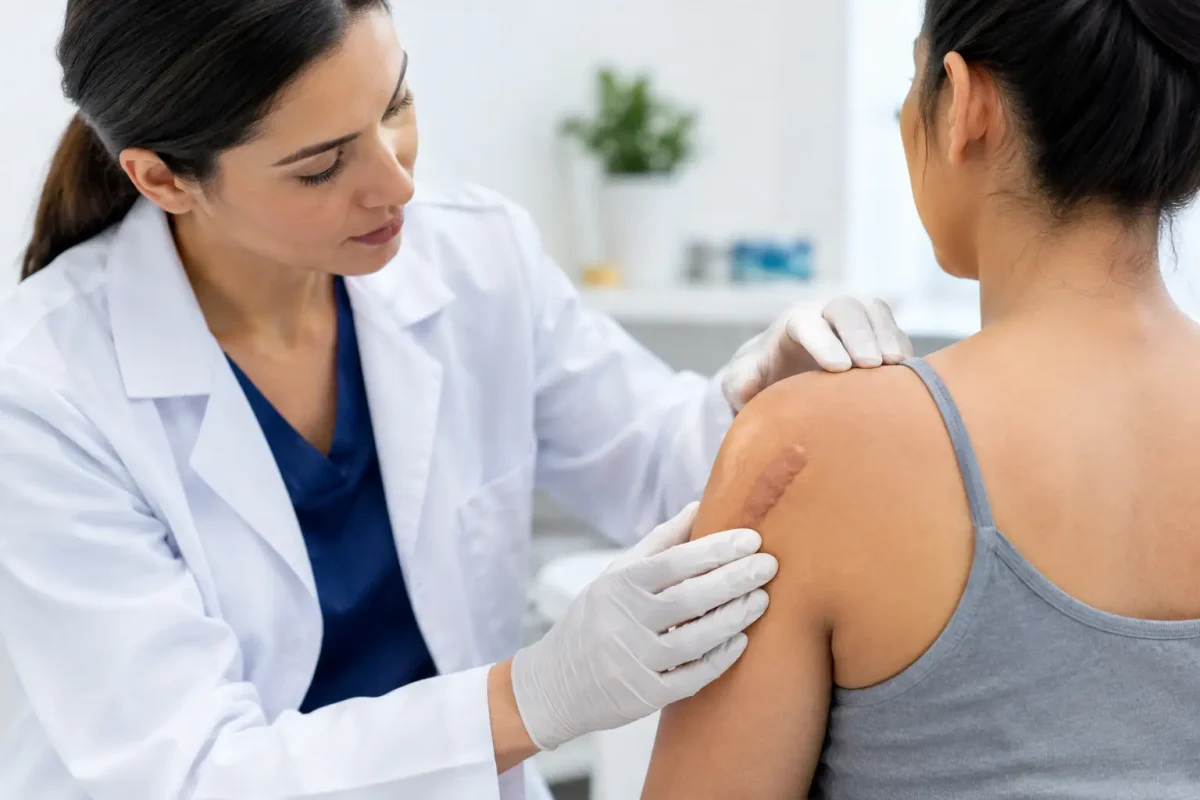
A keloid may be small, but its effect can feel anything but small. When a raised scar pulls, itches, causes tenderness, or draws unwanted attention on the ear, jawline, cheek, or neck, patients often want a lasting answer. Keloid scar surgery can improve contour and comfort, but removing the visible scar is only one part of treatment. The more important question is how to reduce the chance that it returns.
Keloids are biologically active scars, not simply excess skin. They grow beyond the original wound boundary as the body continues producing collagen after healing should have settled. This behavior is why a careful, individualized plan matters so much, particularly in highly visible areas of the face and ears where precision, proportion, and skin quality all matter.
Why Keloid Scars Need a Different Surgical Approach
Keloids can develop after acne, ear piercing, a surgical incision, a laceration, or even a minor inflammatory skin injury. Some arise months after the original event. Others continue growing slowly for years. They are more common in people with a personal or family tendency toward abnormal scarring, and they can occur across all skin types.
A conventional scar can often be revised with surgery alone. A keloid is different. Excision alone can trigger the same overactive healing response that formed the scar in the first place, and recurrence rates can be high without additional treatment. For this reason, successful care typically combines meticulous removal with a prevention strategy selected for the location, size, history, and behavior of the keloid.
The goal is not merely to make the scar smaller. It is to create the most favorable conditions for quiet, controlled healing while preserving natural facial contours and minimizing tension on the incision.
Who May Be a Candidate for Keloid Scar Surgery?
Surgery may be appropriate when a keloid is enlarging, painful, itchy, repeatedly irritated, or cosmetically distracting. It can also be considered when prior injections or non-surgical care have softened the scar but have not sufficiently improved its size or shape.
The best candidates understand that keloid treatment is a process rather than a one-time event. A patient who has developed a keloid after a prior procedure, piercing, or injury may still be an excellent candidate for treatment, but they need a plan designed around their individual recurrence risk.
Location is especially relevant. Earlobe keloids, for example, often respond well to carefully planned excision with compression and adjunctive treatment. Keloids along the jawline, neck, or surgical scars may require more detailed planning because skin tension, movement, and aesthetic subunits influence both the incision design and healing process.
The Consultation: Looking Beyond the Scar
A meaningful consultation begins with the scar’s story. Your surgeon will ask how and when the keloid formed, whether it has changed over time, what treatments you have tried, and whether you or close relatives have a history of similar scars. Previous surgery, steroid injections, piercing removal, trauma, or radiation treatment can all affect the recommendation.
The examination considers more than the keloid itself. Skin quality, scar thickness, surrounding tissue, facial movement, and the amount of tension expected after removal help guide the surgical design. On the ear, for instance, preserving a natural rim and avoiding distortion are central to the plan. On the face or neck, the incision may be positioned within favorable natural lines whenever possible.
This is also the time for a clear discussion about trade-offs. A surgeon can often improve a keloid substantially, but no treatment can promise that a person prone to keloids will never form another one. Thoughtful counseling should set realistic expectations while explaining what can be done to lower the risk.
What Happens During Keloid Scar Surgery?
Keloid scar surgery is generally performed using local anesthesia, sometimes with sedation depending on the scar’s location, size, and the patient’s comfort. The procedure is tailored to the anatomy rather than approached as a simple removal.
The surgeon carefully excises the keloid while preserving as much healthy surrounding tissue as possible. In facial areas, this requires an understanding of the skin’s natural tension patterns and underlying structural support. The remaining skin is then brought together with precise, low-tension closure techniques. Reducing tension is not a minor detail. Tension can stimulate an unfavorable healing response and may contribute to widening or recurrence.
For larger scars or scars in areas with limited mobile tissue, reconstruction may be needed to achieve a natural closure. This can involve local tissue rearrangement or other reconstructive techniques selected to protect contour and avoid distortion. Skeletal expertise meets surgical artistry when the treatment plan must account for both scar biology and the facial framework beneath it.
Preventing Recurrence After Keloid Scar Surgery
Adjunctive therapy is often the defining part of a successful treatment plan. The right option depends on the scar and the patient, but treatment may include corticosteroid injections, compression therapy, silicone-based scar care, or carefully coordinated postoperative radiation therapy in selected cases.
Steroid injections can help reduce inflammation and collagen production within a forming or recurrent scar. They may be used before surgery, at the time of excision, or during follow-up visits. Compression is particularly useful for certain ear keloids, where a custom pressure device may be worn consistently for a prescribed period.
Silicone gel or sheeting may support scar maturation once the incision has healed sufficiently. For keloids with a high risk of recurrence, postoperative radiation can be considered through collaboration with a radiation oncology team. This is a specialized decision that requires a detailed discussion of expected benefit, alternatives, and the specific treatment area.
No single approach is right for every patient. An earlobe keloid after a piercing may call for a different protocol than a broad neck scar following surgery or trauma. Individualized planning is the safest way to balance recurrence prevention with the health and appearance of the surrounding tissue.
Recovery and Scar Care
Most patients experience mild soreness, swelling, or tenderness after surgery, usually manageable with the recovery plan provided by their surgeon. Depending on the area treated, sutures may be removed within about one to two weeks. Keeping the incision clean, protected, and free from avoidable tension is essential during this early stage.
You may be asked to avoid strenuous activity, stretching of the treatment area, or pressure that could disrupt the healing incision. If your keloid was removed from the ear, you may need to use a compression device as directed. Sun protection is also important, particularly for facial scars, because ultraviolet exposure can worsen discoloration while the scar is maturing.
Follow-up appointments are not simply routine check-ins. They allow the surgeon to identify early thickening, itchiness, redness, or firmness before a recurrence becomes more established. Some patients benefit from a series of postoperative injections or continued scar therapy over several months. Consistent follow-through can make a meaningful difference in the final result.
When Will You See the Final Result?
The immediate improvement after removal may be visible right away, but the incision itself will continue to mature over many months. Early redness or firmness does not necessarily indicate recurrence. Healing scars often change gradually before they soften and fade.
A favorable result means more than a flatter scar. It should also respect the natural shape of the ear, face, or neck and allow the area to look balanced rather than treated. Patients who have lived with a prominent or uncomfortable keloid often find that improvement in daily comfort is as meaningful as the aesthetic change.
Specialized Facial Planning Matters
Keloids in visible facial areas require both reconstructive judgment and aesthetic restraint. The aim is to treat the abnormal scar without creating unnecessary tension, contour changes, or an incision that competes with the surrounding facial features. At Advanced Facial Surgery, Dr. Manolakakis applies detailed facial and maxillofacial expertise to treatment planning, with a focus on safety, natural proportions, and clear, pressure-free guidance.
The right plan begins with an honest evaluation of your scar’s behavior and your goals. With precise surgery, attentive follow-up, and a thoughtful recurrence-prevention strategy, keloid treatment can move beyond simply removing a scar toward helping the area heal with greater comfort, balance, and confidence.