
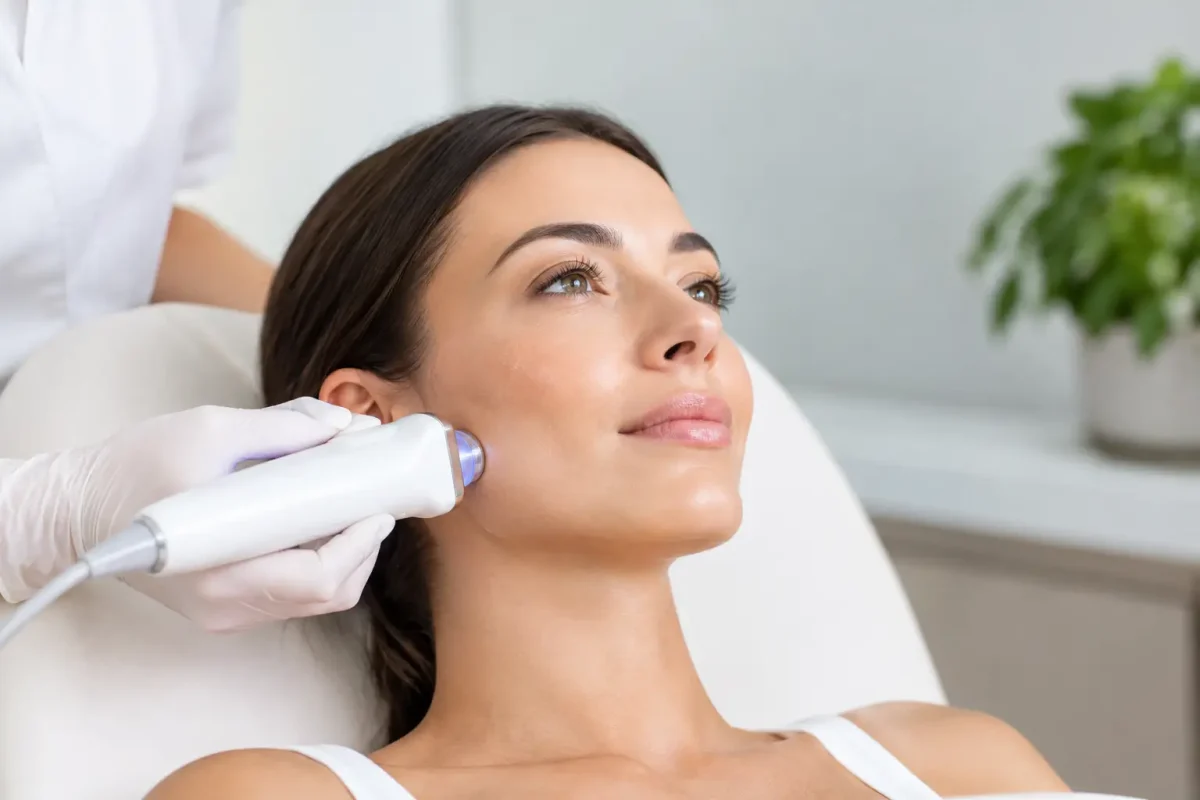
A softer jawline, early jowling, or fullness beneath the chin can make the face look less defined even when the skin itself is in good condition. Evoke facial contouring treatment offers a non-surgical way to address these concerns with gradual, natural-looking refinement. Rather than changing the character of your face, it is designed to support a more rested, balanced contour over a series of comfortable in-office sessions.
For patients who want thoughtful facial enhancement without incisions or a lengthy recovery, the appeal is clear. Still, the right treatment depends on what is creating the change in your facial shape: skin laxity, tissue fullness, volume loss, skeletal structure, or a combination of factors. A careful evaluation is what turns a treatment into an appropriate plan.
How Evoke Facial Contouring Treatment Works
Evoke is a hands-free radiofrequency platform designed to deliver controlled thermal energy to targeted facial and submental tissues. The applicators rest comfortably against the skin, gradually warming the treatment area while the patient relaxes. This controlled heating is intended to encourage collagen remodeling and, depending on the applicator and treatment plan, support improvement in areas of fullness and soft tissue laxity.
Radiofrequency does not remove excess skin or reposition deeper facial structures in the way a facelift or neck lift can. Its role is more conservative. For the right candidate, it may improve the quality and definition of the lower face, cheeks, jawline, and neck without surgery. Results emerge gradually because the body needs time to respond to treatment and remodel collagen.
This distinction matters. A non-surgical treatment should not be presented as a substitute for a surgical procedure when there is substantial jowling, loose neck skin, or significant descent of the facial tissues. The most refined outcomes come from matching the treatment to the anatomy rather than asking one technology to solve every concern.
What an Evoke Session Feels Like
An Evoke appointment is typically straightforward. After the skin is prepared, the provider positions the appropriate applicators over the planned areas. During treatment, patients commonly feel progressive warmth. The system is designed to monitor skin temperature, helping maintain therapeutic heating within a controlled range.
Many patients use the appointment as quiet time to read, answer messages, or simply rest. There are no needles, incisions, or general anesthesia involved. Following treatment, the skin may look mildly pink or feel warm for a short period, but most patients return to normal activities the same day.
Comfort and recovery are genuine advantages, but they should be viewed alongside the commitment involved. Evoke is usually performed as a series rather than a single appointment. The number of sessions, interval between visits, and areas treated depend on the degree of laxity, tissue fullness, skin quality, and the patient’s goals.
Who May Be a Good Candidate?
Evoke can be an appealing option for adults noticing mild to moderate loss of facial definition who prefer a gradual, non-invasive approach. It may be especially useful for a patient who is not ready for surgery, wants to maintain a prior surgical result, or is looking for a treatment that fits easily into a busy schedule.
The best candidates tend to have realistic expectations. They understand that facial contouring with radiofrequency is subtle and progressive, not an overnight transformation. They are seeking refinement: a crisper transition from the jaw to the neck, a modestly firmer lower face, or improvement in the appearance of early laxity.
A consultation should also assess factors that may affect suitability. Active skin irritation or infection in the treatment area may require postponing care. Patients with certain implanted electrical devices, metal hardware in the treatment zone, pregnancy, or medical conditions affected by heat-based therapy should discuss their history in detail. The safest recommendation is always individualized.
Where Evoke Fits Within a Personalized Facial Plan
Facial aging is rarely caused by one issue alone. In some patients, the concern is primarily skin laxity. In others, volume loss through the midface makes the lower face appear heavier, or a recessed chin reduces the apparent definition of the jawline. Weight changes, genetics, and skin quality all influence the picture.
That is why a facial assessment should look beyond the area a patient points to in the mirror. Skeletal expertise meets surgical artistry when the face is evaluated as an integrated structure, not as separate features to be treated in isolation. In selected cases, Evoke may be paired with other non-surgical care, such as injectables, skin resurfacing, or collagen-stimulating treatments, when those options serve the patient’s overall goals.
For more advanced concerns, a surgical discussion may be more honest and more effective. A neck lift can address loose skin and deeper bands that radiofrequency cannot correct. A facelift can reposition descended tissues and restore contour more comprehensively. Recommending surgery when it is appropriate is not pressure – it is part of responsible planning and clear communication.
When Will You See Results?
Some patients notice a temporary sense of firmness soon after treatment, often related to the immediate effect of heat on the tissue. The more meaningful change typically develops over weeks to months as collagen remodeling progresses. Improvement is usually gradual, which can be ideal for patients who want to look refreshed without drawing attention to a sudden change.
Results vary. Age, baseline skin laxity, tissue thickness, lifestyle, sun exposure, weight stability, and the complete treatment series can all influence the outcome. A strong skincare routine and sensible sun protection may help support skin quality, but neither replaces the need for an appropriate treatment plan.
Photographs taken in consistent lighting and positioning can be helpful for judging progress. Day-to-day mirror checks are less reliable, since swelling, hydration, posture, and lighting can make the face look different from one day to the next.
Safety, Expectations, and Choosing the Right Provider
Although Evoke is non-invasive, it is still a medical-aesthetic treatment that deserves thoughtful oversight. The face contains closely related layers of skin, fat, muscle, and supporting structures. Proper treatment planning requires more than placing an applicator on an area of concern. It requires an understanding of how changes in one area may affect facial balance as a whole.
Common short-term effects can include warmth, temporary redness, tenderness, or mild swelling. Your provider should explain what to expect, review your medical history, and give clear aftercare guidance. A pressure-free consultation also creates room for the questions patients often hesitate to ask: Will this make a visible difference? Is a surgical option better for me? What is a realistic timeline?
At Advanced Facial Surgery, the goal is not to steer every patient toward the same solution. It is to offer a recommendation that respects your anatomy, comfort level, and long-term vision for your appearance. Whether that means Evoke, another non-surgical option, or a more definitive procedure, natural-looking facial harmony remains the priority.
The most satisfying aesthetic decisions begin with clarity. If you are considering Evoke, choose a consultation that gives you a precise explanation of what the treatment can improve, what it cannot, and how it may fit into a plan that still looks like you.