
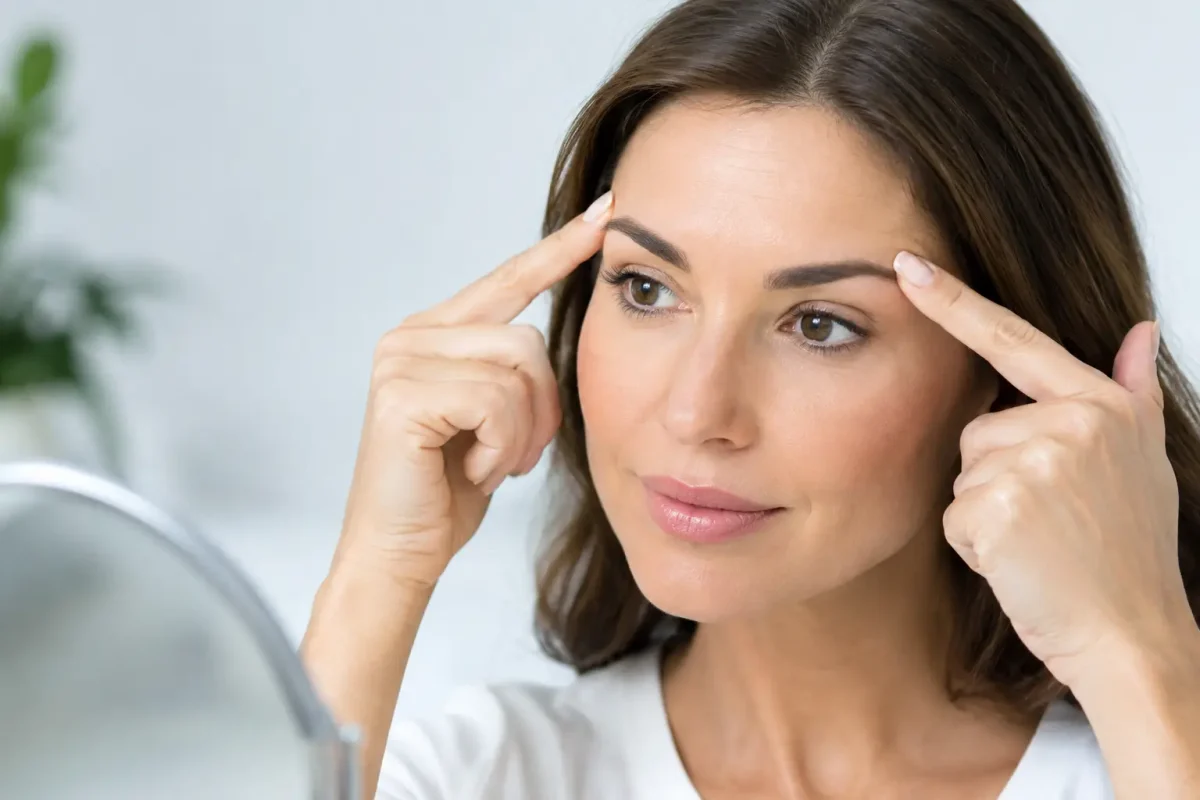
A brow lift for hooded eyes can be transformative when a low or descended brow is contributing to heaviness around the upper eyelids. But not every hooded eye needs a brow lift. In many cases, the concern comes from excess upper-eyelid skin, natural eyelid anatomy, true eyelid ptosis, or a combination of these factors. The distinction matters because the most natural-looking result begins with treating the actual source of the heaviness, not simply removing tissue where it appears most visible.
For patients who feel they look tired, stern, or less open around the eyes despite feeling well-rested, careful facial analysis can clarify whether a brow lift, upper blepharoplasty, or a combined approach is the most appropriate path. The goal is not to create an exaggerated arch or a surprised expression. It is to restore a rested, balanced frame around the eyes while preserving the character of your face.
What Causes Hooded Eyes?
The phrase hooded eyes describes an upper eyelid in which the crease is partially or fully covered by skin and soft tissue. Some people have this anatomy from a young age. For others, it becomes more noticeable over time as the brow descends, skin loses elasticity, and volume changes alter the relationship between the forehead, brow, and eyelid.
A low brow can push downward on the tissues above the eye, creating fullness at the outer upper eyelid and reducing the visible lid space. This is especially common in the lateral brow, or brow tail, which often descends before the central portion of the brow. The result can be a tired or heavy appearance even when the amount of excess eyelid skin is relatively modest.
In other patients, the brow sits in a favorable position but the upper lid has significant skin redundancy, known as dermatochalasis. An upper eyelid lift may address that concern directly. True eyelid ptosis, where the eyelid margin itself sits unusually low, requires a different type of correction. These conditions can overlap, which is why an eye-area consultation should go beyond a quick assessment of excess skin.
How a Brow Lift for Hooded Eyes Works
A brow lift repositions the brow and forehead soft tissues to a more aesthetically balanced level. By elevating tissue that has descended, it can reduce the weight pressing on the upper eyelids and make the eyes appear more open. The procedure is tailored to the patient’s brow shape, hairline, forehead length, skin quality, and overall facial proportions.
For many patients, the aim is selective elevation rather than a dramatic lift across the entire forehead. A refined approach may focus on supporting the outer brow, where descent tends to create the greatest hooding. In others, more comprehensive repositioning is appropriate because the brow has lowered across its full length.
Surgical techniques vary. Depending on anatomy and goals, a surgeon may recommend an endoscopic brow lift using small incisions within the hair-bearing scalp, a temporal approach focused on the outer brow, or another method selected for the safest and most discreet result. The best technique is not universal. It should reflect the degree and pattern of brow descent, the patient’s existing hairline, and the need for durable support.
A brow lift does not change your eye shape in an artificial way. When performed with restraint and precise planning, it can reveal more of the natural upper eyelid and restore a more rested expression without making you look like someone else.
When an Upper Eyelid Lift May Be the Better Choice
It is understandable to assume that hooding always means the brow should be lifted. Yet raising the brow when the brow is already well positioned can create an overcorrected appearance. In that situation, conservative upper blepharoplasty may be more effective.
Upper eyelid surgery removes or repositions excess skin and, when appropriate, small amounts of protruding fat. It is particularly helpful when skin folds rest on the lashes or interfere with makeup application while the brow remains at an appropriate height. A well-planned upper blepharoplasty should respect the natural crease and avoid a hollowed or overly skeletal result.
One important consideration is brow compensation. Some patients unconsciously raise their forehead to improve their visual field or lift heavy eyelid tissue. If too much upper-lid skin is removed without recognizing that compensation, the brow may relax after surgery and reveal residual heaviness. Evaluating the brow at rest is therefore essential before deciding how much skin, if any, should be removed.
Why Combined Treatment Can Be the Most Balanced Option
A brow lift and upper blepharoplasty often complement each other. When brow descent and eyelid skin redundancy are both present, addressing only one area may leave the patient with an incomplete improvement. A combined plan can elevate the brow to a more harmonious position while conservatively refining the upper eyelid.
The word conservative is important. The upper eyelid is a delicate facial area, and it can change dramatically with even small adjustments. Excessive skin removal may affect eye closure, create a hollow appearance, or make the result look operated on. By considering the forehead, brow, eyelid, and cheek as connected structures, the surgeon can make smaller, more purposeful changes.
This whole-face perspective is particularly valuable for patients in their 40s, 50s, and beyond, when volume loss, skin laxity, and descent may occur together. In select cases, treatments such as facial fat grafting, laser resurfacing, or skin-quality therapies may be considered as part of a broader rejuvenation plan. They do not replace a brow lift when structural descent is the issue, but they can improve the quality and continuity of the final result.
What to Expect From Recovery
Brow lift recovery varies with the surgical method and whether additional procedures are performed. Swelling, bruising, forehead tightness, and temporary numbness are common in the early healing period. Most patients feel comfortable returning to social activities within roughly one to two weeks, although residual swelling can take longer to settle.
The brow position also evolves as healing progresses. It is normal for the forehead and brow area to feel different during the first several weeks. Final refinement takes patience, as tissues gradually soften and settle into their new position.
Incision care, activity restrictions, and the timing of your return to exercise should be individualized. A thoughtful surgeon will also discuss practical concerns that matter to patients, including hair washing, sleeping position, work commitments, and when it is reasonable to wear makeup again.
Choosing a Surgeon for Brow and Eyelid Rejuvenation
The brow and upper eyelids are among the most expressive areas of the face. A small change in brow height, shape, or eyelid contour can affect how approachable, rested, or familiar you appear. This is not an area for standardized treatment plans or trend-driven arches.
Look for a surgeon with extensive facial anatomy expertise and a consistent aesthetic philosophy. During consultation, the discussion should include your resting brow position, the degree of eyelid skin excess, forehead movement, eye shape, hairline, prior procedures, and the look you want to preserve. Photographs are useful, but the recommendation should come from an in-person assessment rather than a one-size-fits-all image reference.
At Advanced Facial Surgery, Dr. Manolakakis approaches brow and eyelid rejuvenation through the lens of skeletal expertise and surgical artistry. That means considering not only what can be lifted or removed, but how each adjustment will relate to the patient’s underlying facial structure, expressions, and long-term facial harmony.
Questions Worth Asking During Your Consultation
A strong consultation should leave you clearer, not pressured. Ask whether your hooding is primarily caused by brow descent, eyelid skin, eyelid ptosis, or several issues at once. Ask what level of brow elevation is being recommended and why. You may also want to discuss whether a brow lift alone is likely to meet your goals, whether upper blepharoplasty would add value, and how the plan accounts for your hairline and natural brow shape.
It is equally reasonable to ask about scars, recovery, temporary changes in sensation, asymmetry, and the surgeon’s approach to revision should healing not proceed as expected. Every operation carries risks, including bleeding, infection, visible scarring, changes in sensation, hair loss near incisions, asymmetry, and the possibility of undercorrection or overcorrection. Careful planning and experienced technique help reduce risk, but candid conversation is part of appropriate surgical care.
The right treatment for hooded eyes should make the upper face feel lighter and more awake without calling attention to the fact that surgery was performed. When the plan respects your anatomy and identity, the result can look less like a change and more like you, comfortably restored.