
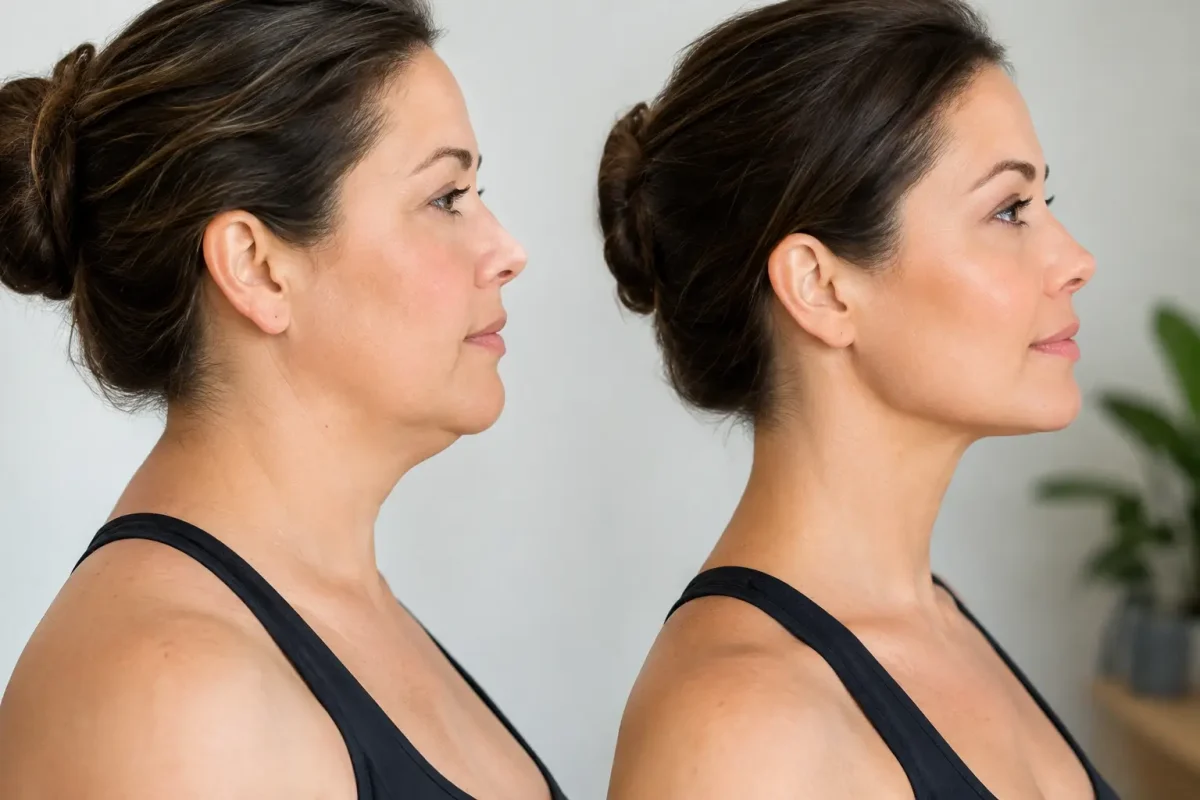
A significant weight-loss milestone can change more than the number on a scale. Many patients feel stronger, healthier, and more like themselves, yet still notice loose skin beneath the chin, vertical neck bands, or a softer jawline that does not reflect how vibrant they feel. A neck lift after weight loss can address these concerns with a plan tailored to the skin, muscle, and facial structure behind them.
The goal is not to create a pulled or unfamiliar appearance. Thoughtful neck contouring is designed to restore definition between the jaw, chin, and neck while preserving the features that make a face recognizable. For patients who have worked hard to reach a stable weight, that refinement can feel like an important final step rather than a dramatic change.
Why Weight Loss Can Change the Neck So Noticeably
The neck is particularly sensitive to changes in facial fat volume and skin elasticity. When weight is lost, the fatty layer beneath the chin and along the jaw may decrease, but the overlying skin does not always contract to the same degree. This is more common after substantial weight loss, with age-related collagen loss, and in patients whose skin was naturally less elastic before losing weight.
The result can vary widely. One person may have mild creasing and early looseness under the chin. Another may see a more pronounced “turkey neck” appearance, visible platysma muscle bands, or skin that gathers at the center and sides of the neck. Bone structure matters, too. A smaller or less projected chin can make neck laxity appear more prominent, even when the amount of extra skin is modest.
This is why non-surgical treatments and a standard approach to skin tightening are not interchangeable with surgery. Devices and injectables may be appropriate for select concerns, but they cannot remove a meaningful amount of excess skin or fully repair separated neck muscles. The right recommendation begins with understanding what is actually creating the concern.
When a Neck Lift After Weight Loss May Be Appropriate
Candidates for neck lift surgery are generally in good overall health, do not smoke or are willing to stop nicotine use as directed, and have reached a weight they can realistically maintain. Weight stability matters. Continued major weight fluctuations can alter the result by changing the volume and skin support in the lower face and neck.
A neck lift may be considered when excess skin remains despite stable weight, when neck bands are visible at rest or with animation, or when a less defined jawline affects the overall balance of the face. Patients often describe feeling that their neck looks older than the rest of them, especially in photographs, video calls, or profile view.
Age alone does not determine candidacy. Some younger post-weight-loss patients have significant skin laxity, while some older patients retain enough elasticity for a more limited procedure. A consultation should also account for medical history, prior neck or facial surgery, scar tendencies, medications, and the condition of the skin.
What Surgery Can Address
A well-planned neck lift works on more than one layer. Depending on the patient’s anatomy, surgery may include removing excess skin, tightening the platysma muscle, reducing or repositioning fat beneath the chin, and refining the contour along the jawline. Incisions are commonly placed around the ears and may include a small incision beneath the chin, allowing access while keeping scars as discreet as possible.
For some patients, the central concern is muscle banding and loose skin. For others, the issue is a combination of residual fullness under the chin, weak jawline definition, and laxity extending into the lower face. Surgical planning should distinguish between these patterns rather than applying the same technique to every neck.
The anatomy beneath the skin deserves particular attention. Neck contouring is closely connected to the chin, jaw, lower face, and underlying skeletal framework. A surgeon with advanced facial and maxillofacial training can evaluate these relationships carefully, helping ensure that the result supports facial harmony rather than simply making the neck tighter.
When a Facelift May Be Recommended Too
A neck lift can provide substantial improvement on its own, particularly when the cheeks and jowls remain well supported. However, loose skin and descent in the lower face often contribute to the appearance of a heavier or less defined neck. In those cases, pairing a neck lift with a facelift may create a more balanced result.
This does not mean every patient needs a full facelift. The appropriate scope depends on where laxity begins, how much skin excess is present, and what the patient hopes to see in the mirror. A deep plane facelift may be considered for patients who need meaningful improvement in the midface, jawline, and neck, while others may be better served by a focused neck procedure. The most natural plans are individualized, not trend-driven.
What About Chin Augmentation or Skin Treatments?
In select cases, improving chin projection with an implant, fat grafting, or another structural approach can enhance the neck profile. This is especially relevant when a recessed chin reduces the distinction between the jaw and neck. It is not necessary for everyone, but it is a valuable consideration when skeletal proportions affect the final contour.
Laser resurfacing, radiofrequency microneedling, and other skin-focused treatments can also have a role in overall quality, fine lines, or mild laxity. They are often best viewed as complementary treatments, not replacements for surgery when substantial loose skin is present. A candid consultation should make this distinction clear rather than overpromising what a non-surgical treatment can achieve.
Recovery: What to Expect
Neck lift recovery requires patience, particularly for patients accustomed to an active lifestyle after weight loss. Swelling, bruising, tightness, and temporary changes in sensation are expected in the early period. A compression garment may be recommended to support healing and help manage swelling.
Most patients need time away from work and social commitments, often around one to two weeks depending on the extent of surgery and the nature of their work. Bruising usually improves first, while swelling can take longer to settle. The neck may feel firm or tight initially, and final refinement develops gradually over the following weeks and months.
Walking is typically encouraged early, but strenuous exercise, heavy lifting, bending, and activities that raise blood pressure must wait until cleared by the surgeon. Patients who have recently transformed their health through fitness should plan for this pause in advance. Respecting recovery is part of protecting the investment in the result.
Every surgery carries risks, including bleeding, infection, fluid collection, delayed healing, asymmetry, contour irregularities, numbness, and scar concerns. Nicotine exposure and poorly controlled medical conditions can increase certain risks. Detailed preoperative planning, meticulous technique, and attentive postoperative care are essential, but no responsible surgeon should present surgery as risk-free.
Preparing for a More Predictable Result
The best preparation begins before surgery is scheduled. Aim for a stable weight, complete any recommended medical clearances, and discuss supplements and medications openly. Blood-thinning medications and certain supplements may need to be adjusted under the direction of the prescribing clinician and surgical team.
It is also useful to define the concern in specific terms. Is loose skin the primary issue? Do neck bands bother you? Is the profile less defined than you would like? Bringing these observations to a consultation helps create a plan based on your priorities, not a generic before-and-after ideal.
At Advanced Facial Surgery, Dr. Manolis G. Manolakakis approaches neck rejuvenation with the understanding that meaningful refinement requires both surgical artistry and careful structural assessment. The conversation should feel pressure-free and clear: what surgery can improve, what trade-offs it involves, and whether it is the right timing for you.
A neck lift after weight loss is most rewarding when it is approached as a personal decision, not a final requirement of weight loss. The right plan should help your reflection feel more aligned with your health, confidence, and identity – with results that look naturally your own.